


Every artist I know has a version of this story.
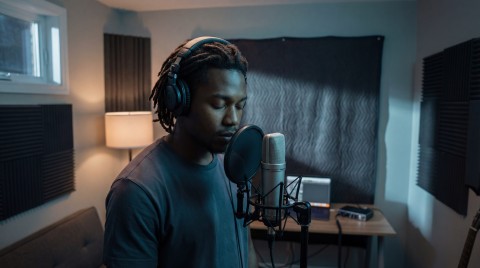
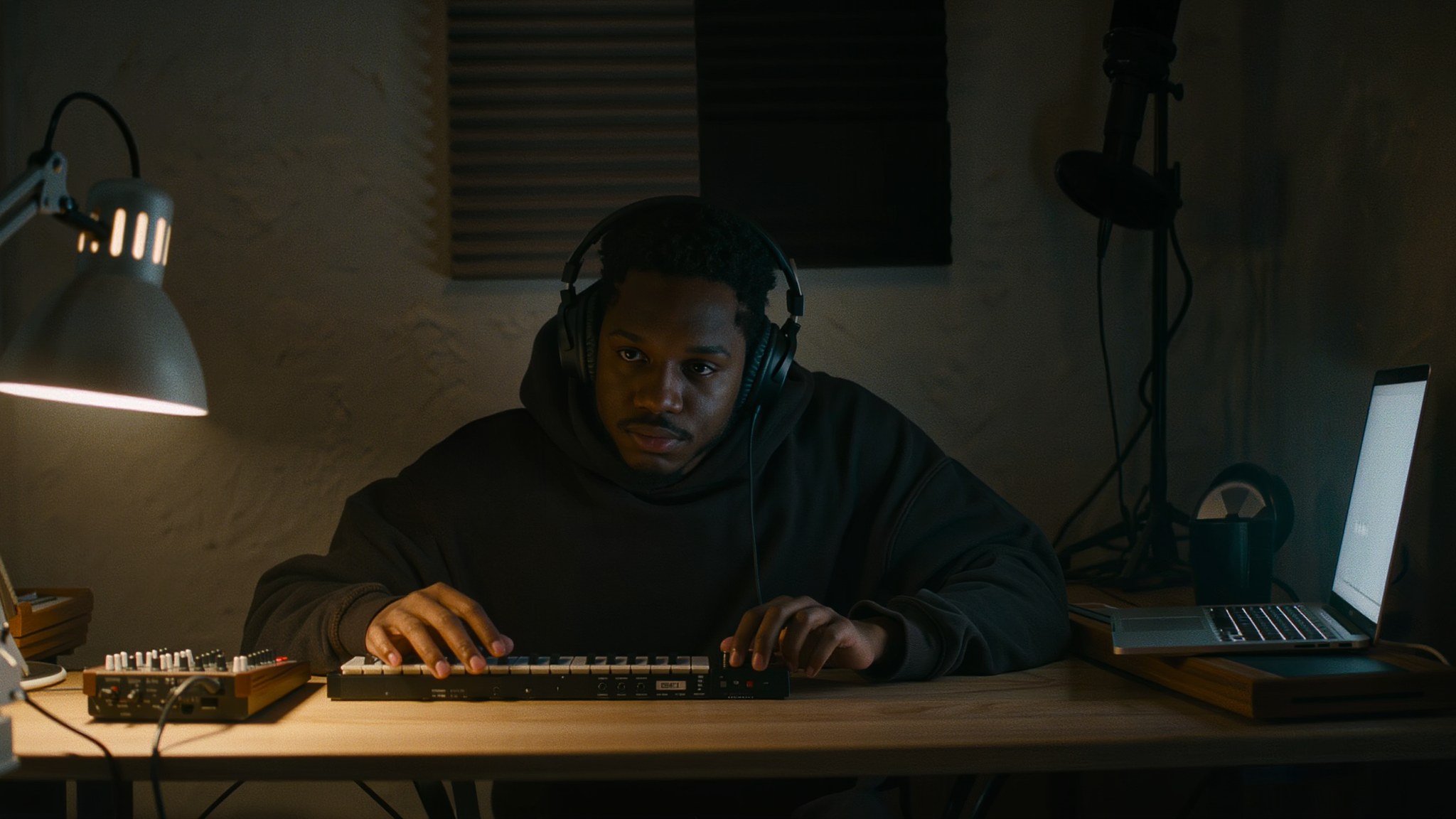
It’s 2:40 in the morning. You’ve been in it for six hours. Somewhere around the fourth hour something cracked open and now the beat is talking to you. You’re hearing things in it you didn’t put there. You bounce it, put it in your phone, walk around your apartment with it in your ears at a volume that would concern your neighbors, and you think: this is the one.
Then you wake up at eleven, play it in the car, and it’s fine. It’s just fine. It’s a song.
The gap between those two moments is not a mystery, and it’s not you losing your nerve. It’s documented, it’s measurable, and once you understand what’s actually happening in your head at 2 AM, you can stop letting it run your career.
The high is real. That’s the problem.
We should be clear about something first: the 2 AM feeling isn’t fake. You are not imagining the rush.
In 2011, researchers at Berkeley put sleep-deprived people in an fMRI scanner and showed them pleasant images. What they found is that sleep deprivation “amplifies reactivity throughout human mesolimbic reward brain networks in response to pleasure-evoking stimuli.” Your reward circuitry doesn’t get quieter when you’re exhausted. It gets louder.
And here’s the part that should stop you cold. The sleep-deprived group didn’t just feel more — they judged more things as pleasant. The study describes “a biased increase in the number of emotional stimuli judged as pleasant.” Meanwhile, the connection between that reward response and the frontal regions that normally evaluate it — the medial prefrontal and orbitofrontal cortex — got weaker.
Read that as a producer instead of as a science headline.
At 2 AM your “this is amazing” signal is turned up and your “is it, though?” signal is turned down. That’s not inspiration. That’s a documented perceptual bias, and it applies to every beat, every take, and every mix decision you make in that state.
The song didn’t get worse overnight. Your instrumentation got recalibrated.
And it swings the other way just as hard
Now the flip side, because this is the part people miss.
The same lab found in 2007 that after a night without sleep, the amygdala — the part of the brain that handles threat and negative emotion — showed a 60% greater magnitude of activation compared to rested controls, along with a three-fold increase in how much of it lit up. The researchers called it “a failure of top-down, prefrontal control.”
Same deprivation. Opposite direction.
Which explains the 4 AM version of the story — the one where you’ve been at it too long, something isn’t sitting right, and suddenly you’re not thinking “this hi-hat is off.” You’re thinking “I’ve wasted four years.” You delete the session. You’ve all done it. I’ve done it.
Put the two studies side by side and you get the real lesson, and it isn’t “the night version is wrong and the morning version is right.”
It’s that at 2 AM you are unreliable in both directions. The euphoria and the despair are the same broken instrument reading high and reading low. Neither one is information about your song.
What you’re staying up for is the thing sleep actually does
Here’s the irony that reorganized how I think about all of this.
The reason we romanticize the late session is that unexpected connections happen there. The sample flipped against the drums you’d never have put it with. The bar that only works because it shouldn’t. That loose, associative, everything-touching-everything state is the thing you’re chasing at 3 AM.
That state has a name in the research, and it has a source, and the source is not staying awake.
In a study out of UC San Diego, participants took the Remote Associates Test — you get three unrelated words and have to find the fourth that links all three. Classic measure of creative association. They tested in the morning, then again in the afternoon, after one of three things: a nap with REM sleep, a nap without REM, or quiet rest.
Only one group improved. The REM sleep group improved by almost 40 percent over their morning performance. The non-REM nappers and the quiet-rest group didn’t.
Lead researcher Sara Mednick put the distinction plainly: for problems you’ve already been chewing on, time alone helps. But “for new problems, only REM sleep enhances creativity.”
So the wild associative leap — the thing you’re burning your Tuesday night trying to force — is manufactured by your brain during REM. And REM is disproportionately concentrated in the back half of the night. The hours you’re cutting off the end to stay in the session are precisely the hours that build the ability you went into the session hoping to use.
You are not sacrificing sleep for creativity. You’re spending creativity to buy hours.
Your ears are lying to you too
Separate from your brain, there’s a purely physical problem, and it’s the one that actually costs you money.
Ears fatigue. After a few hours of the same loop at the same level, your hearing desensitizes — and the standard response is to compensate. You push the highs because they’ve gone dull. You add low end because it isn’t hitting. Then you play it back the next day on a system that hasn’t been sitting in your session for five hours, and it’s harsh and boomy and you have no idea why you did that.
The exposure math is not forgiving either. NIOSH sets its recommended limit at 85 A-weighted decibels over an eight-hour shift, and for every 3 dBA increase, the recommended exposure duration is cut in half.
Three decibels. That’s barely a nudge on the knob. Nudge it twice and your safe window drops from eight hours to two.
And when do people turn it up? When they’re tired and it stops hitting. Which is exactly when their ears are least able to take it and their judgment is least able to catch it.
Two practical guardrails that cost nothing. Monitor at a level where you can hold a conversation without raising your voice, and take a 10-minute break every hour or a 20-minute break every 90 minutes. Mixing loud feels incredible and translates terribly — the thumping low end and glossy top you’re hearing at volume mostly isn’t there when someone plays it on their phone.
Your hearing is the one piece of studio equipment you cannot replace, upgrade, or buy used. You’ll happily research headphones for three weeks and then torch the thing the headphones are for.
I’m not telling you to go to bed at ten
Let’s be honest about the life. You’ve got a job. You’ve got people. The only hours that are actually yours start after everyone else’s day ends. Telling an independent artist to keep banker’s hours is useless advice from someone who doesn’t live it.
So the fix isn’t “stop working at night.” The fix is to stop asking the 2 AM version of yourself to do a job it’s neurologically unfit for.
Split the work in two.
Night is for making. Morning is for deciding. Generating, playing, chasing, stacking ideas, recording takes — the loose exploratory stuff genuinely benefits from a lowered filter. That’s the one thing the state is good for. But every decision that’s expensive to undo — the final mix, the tracklist, whether the song is done, whether the song is trash — gets made in daylight. No exceptions. That single rule fixes most of this.
Never send anything after midnight. Not the beat to the artist, not the mix to the client, not the “yo I think this is the single” voice note. Write it, save it, send it at 9 AM. Half of what you would have sent, you won’t. That’s the rule working, not the rule failing.
Bounce it and stop touching it. When you catch yourself on the twentieth pass of the same eight bars, you’re past the point where you’re improving anything. Bounce, close the laptop, sleep. The version of you that hears it fresh tomorrow is a better engineer than the version of you grinding at 3 AM, and it’s the same amount of work.
Use the nap on purpose. A REM-containing nap is a tool, not a weakness. Stuck on an arrangement in the afternoon? Sleeping on it is a documented intervention with a measured effect size, not procrastination.
Protect the back half of the night when it counts. You can’t do it every night. But the week you’re finishing something that matters, that’s the week to guard the last stretch of sleep, because that’s where the associative thinking gets built.
The thing I actually want you to take from this
The no-sleep thing is treated as evidence of how much you want it. Grinding until 5 AM is the flex. Nobody posts the nap.
But look at what the sleep is actually doing. It’s not downtime between sessions. It’s where the material gets consolidated and the strange connections get made — the exact capacity you’re staying awake to try to force by hand. The all-nighter isn’t proof of dedication. It’s an expensive way to work with worse tools.
You don’t have to become a morning person. You don’t need better gear for this either. You just have to stop trusting a version of yourself that the science says is running a rigged meter — in both directions.
Make at night. Decide in the morning.
The song will still be there. It’ll just be a more honest version of itself, and so will you.
Research cited here comes from peer-reviewed sleep and hearing science; links go to the primary sources. This is a piece about creative work habits, not medical advice — if you’re dealing with genuine insomnia or ongoing exhaustion, that’s a conversation for a doctor, not a blog.