


People ask what I record on more often than they ask about anything else, and the answer always lands a little flat. I think they are expecting a longer list.
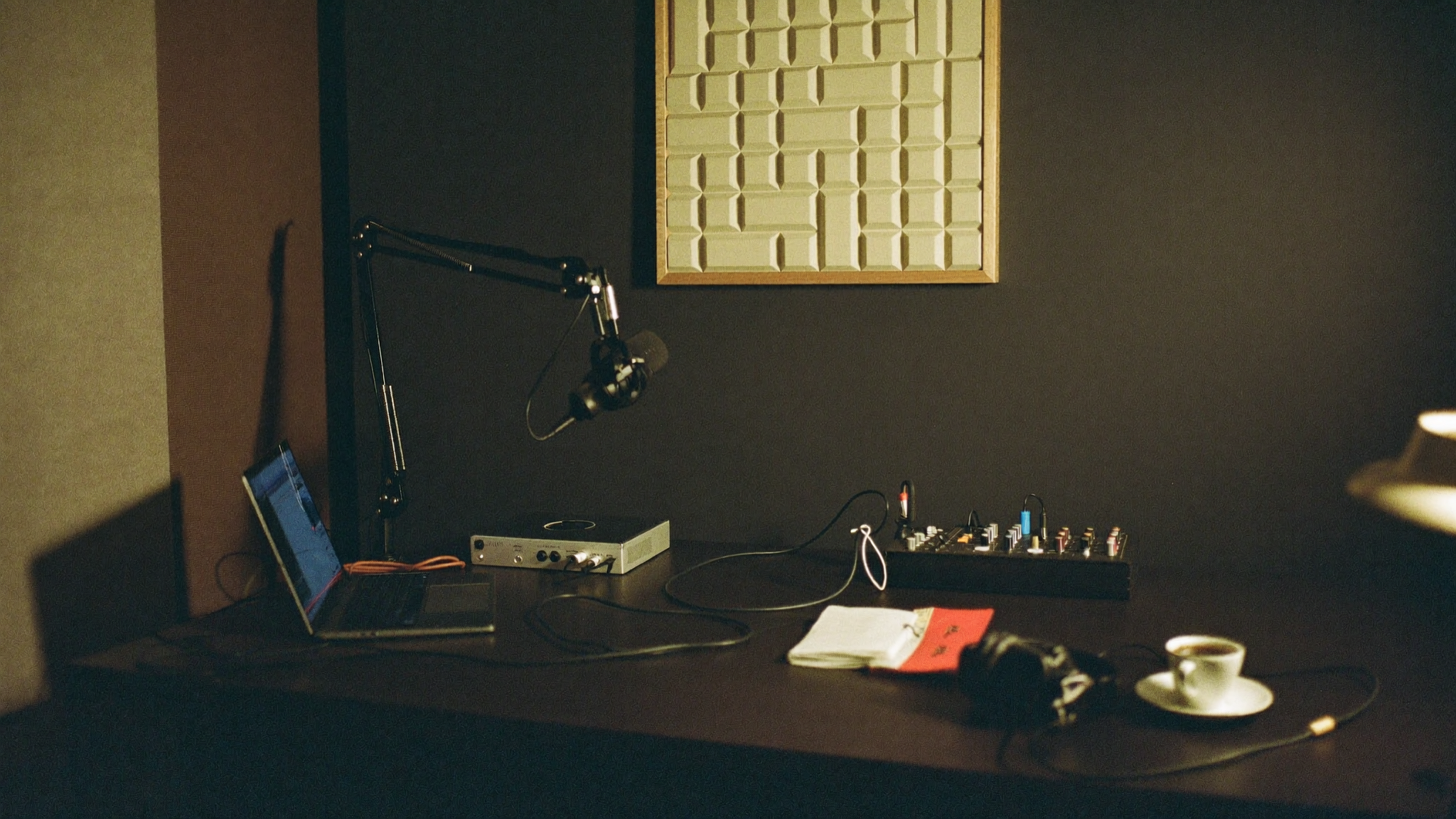
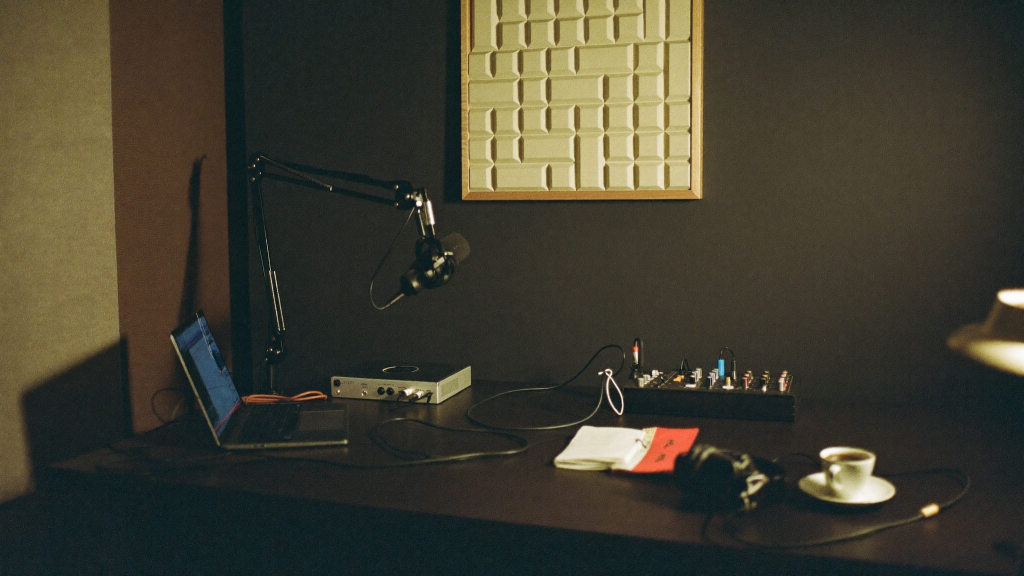
There is one microphone in this room. One interface. One pair of headphones I have worn nearly every day for years. Some foam-free panels on the wall that I made an afternoon of, and a boom arm that has been re-tightened more times than it should need.
That is it. That is the whole studio.
I say that not to be humble about it. I say it because for years I believed the list was supposed to be longer, and that belief cost me money and, worse, cost me finished songs.
Disclosure: This article may contain affiliate links. If you use them, it supports AlwaysBeOG at no additional cost to you. Everything here is gear I actually use.
The room came before any of it
If I could only keep one thing on this list it would not be a piece of equipment. It would be the panels on the wall.
Thick absorption behind where I stand, more in front, and something dense stuffed into the corners. It is the least interesting purchase I have ever made and it changed my recordings more than every microphone upgrade combined.
I resisted it for a long time because it did not feel like buying gear. Nobody asks what panels you use. There is no unboxing video. You hang some heavy rectangles on a wall and the room simply stops arguing with you.
I wrote up the reasoning in the room acoustics breakdown. The short version: your microphone hears your voice, and then it hears your voice again a few milliseconds later off every hard surface in the room. That second version is what makes a recording sound like a bedroom.
One thing I got wrong first time: I bought thin foam tiles because they were cheap and looked like what studios have on the walls in photographs. They did close to nothing. Foam handles the frequencies that were never really your problem.
The microphone
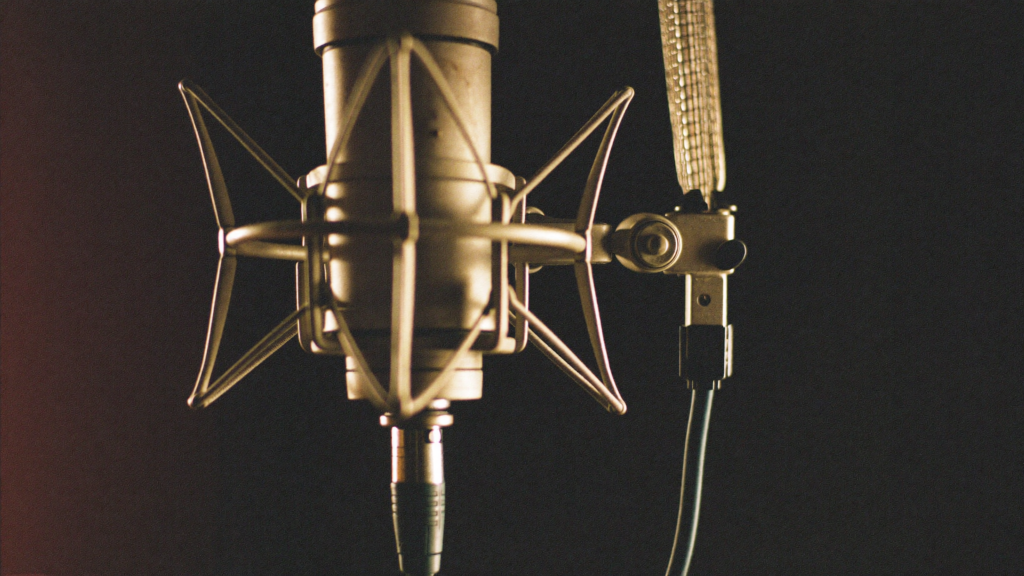
I record on a Shure SM7B.
It was not my first. My first was a cheap USB microphone that I was slightly embarrassed by and should not have been, because I wrote songs on it that I still stand behind. The mic was never the reason those recordings were rough. I was standing two feet from a bare wall.
The SM7B is a dynamic mic, which means it hears less of the room than a condenser does. In a space that is not perfectly treated that is genuinely useful. It is also forgiving on a loud vocal in a way that flatters how I actually rap, which is not gently.
Here is the part nobody mentions when they recommend it. The SM7B is quiet. It needs a lot of clean gain to reach usable level, and on an entry-level interface you end up running the preamp near maximum, which amplifies the interface’s own hiss right along with your voice. So I also own a Cloudlifter, an inline booster that adds about 25dB of clean gain before the signal reaches the interface at all.
Which means the SM7B was never a $400 microphone for me. It was closer to $525 once the thing it needs to work properly is counted. I did not know that when I bought it. I would still buy it, but I would budget honestly for it, and if I were starting again on a tight number I would take a good condenser in a treated room instead. That is exactly why the SM7B is not in the under-$1,000 build I put together.
The interface
A Focusrite Scarlett 2i2. Two inputs, which is one more than I have ever needed and exactly right the two times somebody else was in the room.
I have nothing dramatic to say about it, and that is the highest compliment I can pay a piece of equipment. It powers the mic, it converts the signal, the headphone output is loud enough to perform against, and in years of use it has never once been the reason a session went badly.
I upgraded to a nicer interface once, chasing a sound I thought was hiding in the converters. It was not. The problem that day was the room, and I have written about that whole misunderstanding since, because it is a very common one and an expensive one.
The headphones
Audio-Technica ATH-M50x, and I want to be precise about what they are good for, because I got this wrong for about a year.
They are excellent for tracking. Closed back, so nothing bleeds into the microphone. Comfortable enough for a long night. They fold up and come with me.
They are not what I would choose for final mix decisions. Their low end is generous, which means mixes I finished on them kept arriving bass-light in the car. That is not a flaw in the headphones. It is a tracking headphone being asked to do a mixing job, which I have since covered properly in the mixing headphones guide.
What actually fixed my mixes was not a second pair. It was referencing — pulling up two or three finished records in the same lane, matching levels, and switching back and forth until my own track stopped sounding like an outlier. That habit is free and I ignored it for years while I looked at headphones.
The cheap things nobody asks about
These add up to less than the microphone and they save more takes than any of it.
- A boom arm. Gets the mic off the desk so it stops hearing me lean on things.
- A shock mount. Same idea, for everything the arm still transmits.
- A pop filter. Twenty-five dollars against a whole category of ruined vocals. I recorded without one for far too long and re-did far too many lines.
- One decent XLR cable. Not an expensive one. A decent one, and then no further thought.
What I would buy again without thinking
The panels. Instantly, and more of them, and sooner.
The interface, because it has been invisible in the right way for years.
The pop filter, which is a strange thing to feel strongly about until you count the takes it has saved.
The microphone, with clearer eyes about what it really cost.
What I would skip
The foam tiles. A decorative purchase I mistook for an acoustic one.
The interface upgrade I bought while the room was still bare. Right product, wrong order, and the order was the whole problem.
Most of the plugins I bought in sales because they were discounted rather than because a song needed them. I use a handful. I own considerably more than a handful.

What I still do not own, on purpose
Studio monitors. I keep nearly buying them. In a room this size, in a building with neighbours, monitors would tell me confident lies about my low end and I would mix to those lies at a volume I cannot use after nine at night anyway. Treated room and headphones I know well beats budget monitors I do not.
A MIDI controller. I have never once been stopped by not having one. If that changes I will buy one that week.
A second microphone. There is a version of me that owns four and uses one. I know that guy. I am trying not to be him.
The thing that actually changed my recordings
None of the above.
What changed my recordings was learning where to stand. How far off the mic, at what angle, how to move back on the loud line instead of hoping a compressor would catch it later. That took months and cost nothing and no one asks me about it.
The second thing was doing more takes. Not better gear — more attempts. The records I am proud of are not the ones made after an upgrade. They are the ones I ran twenty times because the nineteenth was still not it.
I understand why gear questions are more appealing than that. Gear is solvable. You can research it, buy it, and feel like you made progress by the end of an evening. Learning to perform into a microphone is slow and unglamorous and there is nothing to open at the end of it.
But that is where the difference actually lives, and I would rather tell you that than sell you a longer list.
The part that matters
If you took my exact setup and put it in an untreated room with someone who has not learned their mic, it would sound worse than a cheap microphone in a closet full of coats, used by someone who has done the reps.
That is not a motivational line. It is just how the physics and the practice stack up, in that order.
Whatever is in your room right now is probably enough to make something worth hearing. The room, the reps, and then the gear. That is the order I would give anyone starting over.
Record something on what you already have this week. That is the next right thing, and it is enough.