


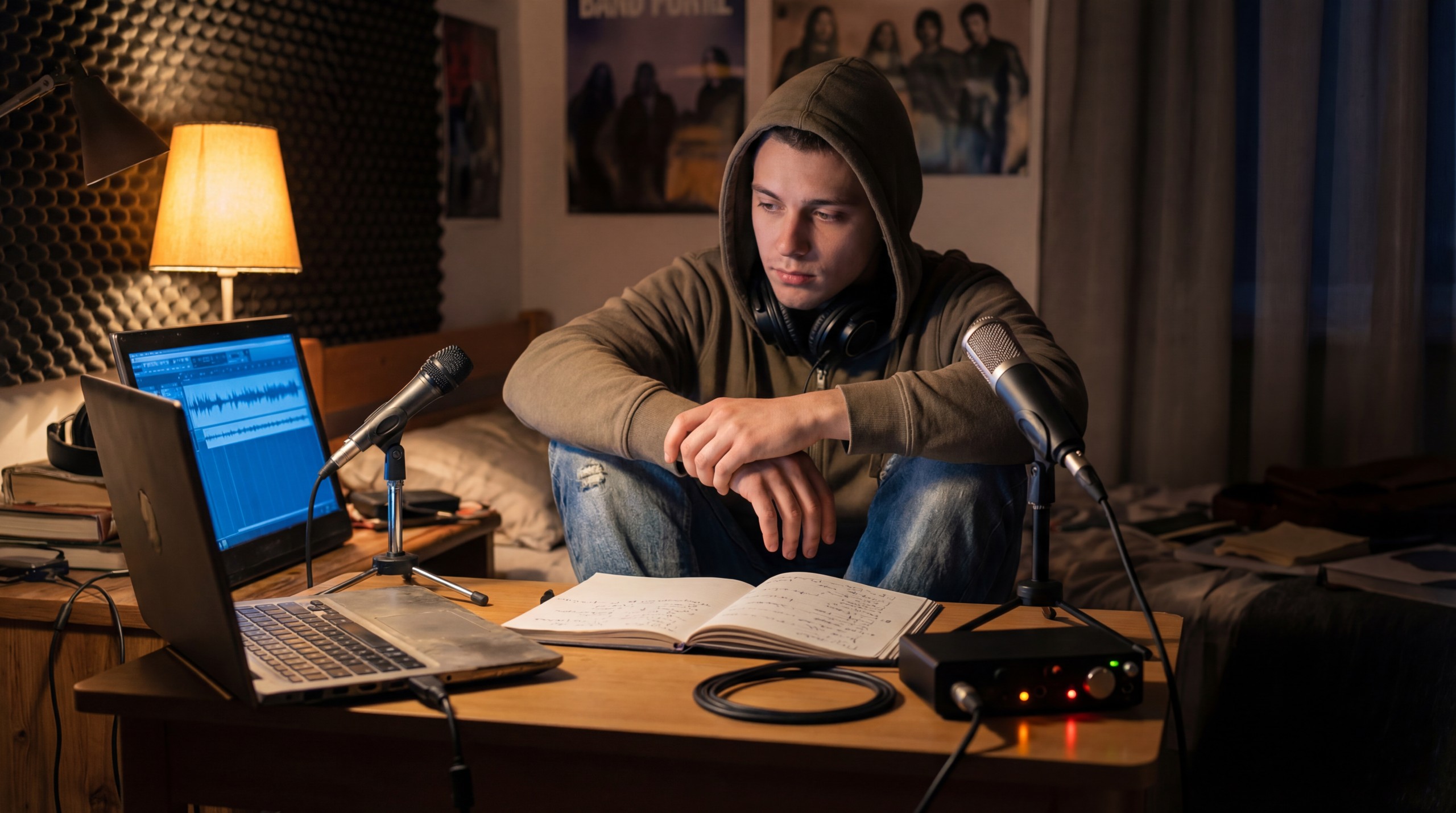
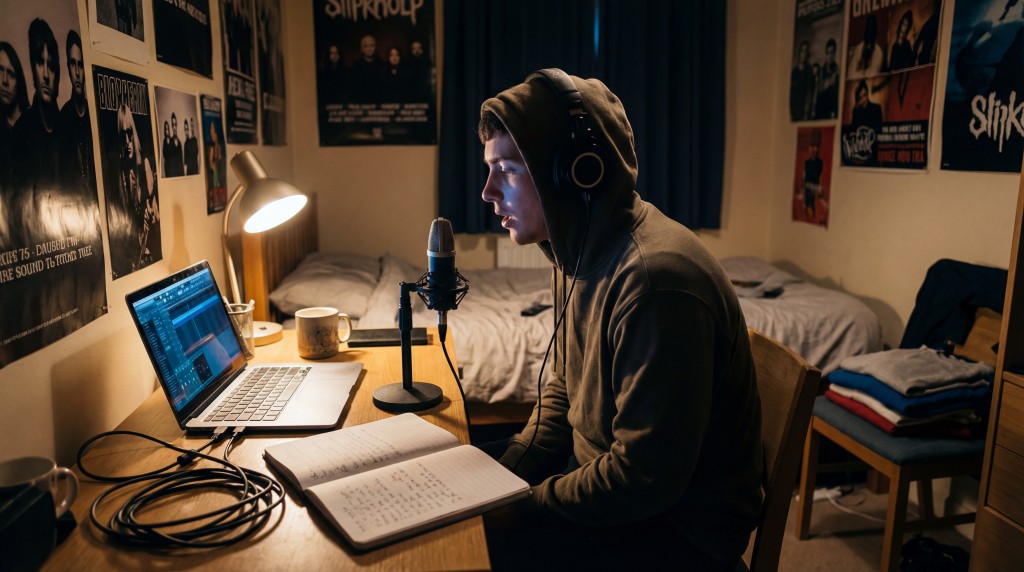
If you are an independent rapper, chances are your first serious recording setup started in a bedroom, a closet, or a corner of a shared apartment. You probably recorded when the house was quiet, learned mic technique through trial and error, and slowly realized that sound quality matters more than most people admit. Somewhere along that journey, one question almost always comes up.
Should I use a USB microphone or an XLR microphone?
USB vs XLR microphones for rap vocals is one of the most common questions independent rappers face when building a home recording setup.
This question gets asked constantly because it sits at the intersection of creativity, money, and growth. It is not just about sound. It is about where you are as an artist, how you work, and where you want to go. The truth is that neither USB nor XLR microphones are inherently “better” in every situation. They serve different purposes, and understanding those purposes can save you money, frustration, and wasted time. When comparing recording setups, USB vs XLR microphones for rap vocals often comes down to workflow, budget, and how seriously an artist wants to scale.
This article is written specifically for independent rappers. Not engineers. Not tech reviewers. Not people chasing specs for the sake of specs. Artists who want to record clean vocals, improve consistency, and build a setup that grows with them.
USB vs XLR Microphones for Rap Vocals: What Independent Rappers Need to Know
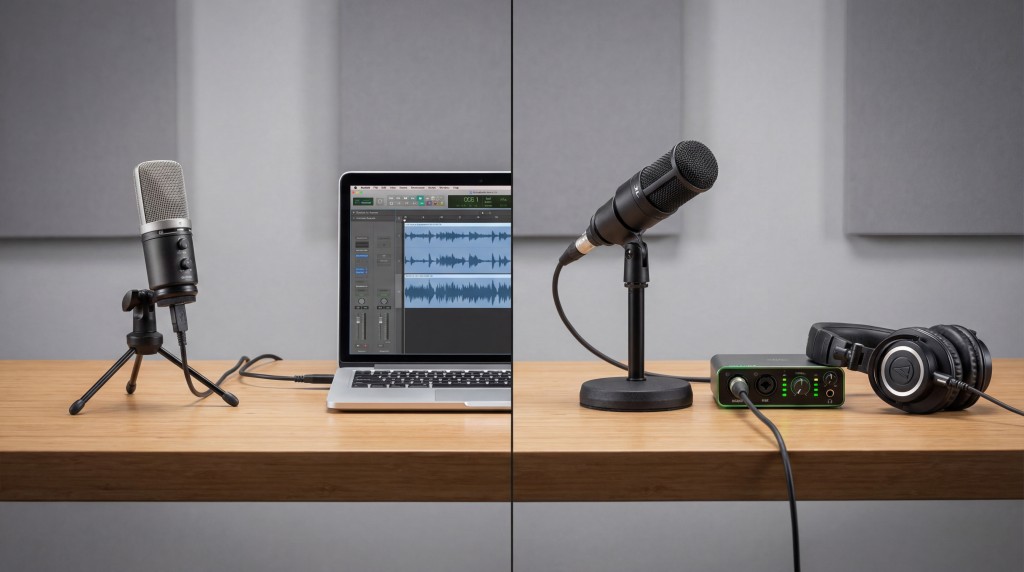
At the most basic level, the difference between USB and XLR microphones is how they connect and what they require to work.
A USB microphone is an all-in-one solution. It has a built-in audio interface, meaning it converts your voice into digital audio inside the mic itself and sends it directly to your computer through a USB cable. You plug it in, select it as your input, and you can record immediately.
An XLR microphone is part of a modular system. The mic itself captures sound, but it needs an external audio interface to convert that sound into digital audio. The microphone connects to the interface using an XLR cable, and the interface connects to your computer via USB or Thunderbolt.
On paper, USB is simpler and XLR is more complex. In practice, that simplicity or complexity has real consequences for sound quality, flexibility, and long-term growth.
Why USB Microphones Became Popular for Rappers
USB microphones exploded in popularity because they removed barriers. You no longer needed to understand gain staging, phantom power, or signal flow. You could buy one mic, plug it in, and start recording.
For independent rappers, this mattered. Many artists were learning how to write, perform, mix, and market their music at the same time. Anything that reduced friction was attractive.
USB microphones also fit the reality of early-stage artistry. When you are still figuring out your sound, your voice, and your workflow, you want something that works immediately. You want to focus on writing verses and capturing ideas, not troubleshooting hardware.
Another reason USB mics became common is accessibility. They tend to be cheaper upfront. Instead of buying a microphone, an interface, cables, and possibly a stand, you could buy a single device and be recording within minutes.
For demo tracks, early mixtapes, reference vocals, and songwriting sessions, USB microphones absolutely have a place.
Where USB Microphones Fall Short
The limitations of USB microphones usually do not show up immediately. They appear as your ear improves and your standards rise.
One major limitation is the built-in audio interface. Because it is built into the mic, you cannot upgrade it independently. If the preamp quality is mediocre or the analog-to-digital conversion is noisy, you are stuck with it. No matter how much your mixing skills improve, the raw signal has a ceiling.
Another issue is monitoring and latency. Many USB microphones have basic headphone monitoring, but it is often less flexible than a dedicated interface. Latency issues can become frustrating when you are trying to record tight rap vocals, especially with fast delivery or layered takes.
USB microphones also limit expandability. You cannot easily add outboard gear, upgrade preamps, or integrate with more advanced studio setups. If you later want to record multiple artists at once or add hardware processing, a USB mic becomes a bottleneck.
Finally, USB microphones tend to exaggerate room problems. Many popular USB mics are bright and sensitive, which means untreated rooms sound harsher. Sibilance, reflections, and background noise become more noticeable.
These issues do not mean USB microphones are bad. They simply mean they are optimized for convenience, not long-term scalability.
Why XLR Microphones Are the Industry Standard
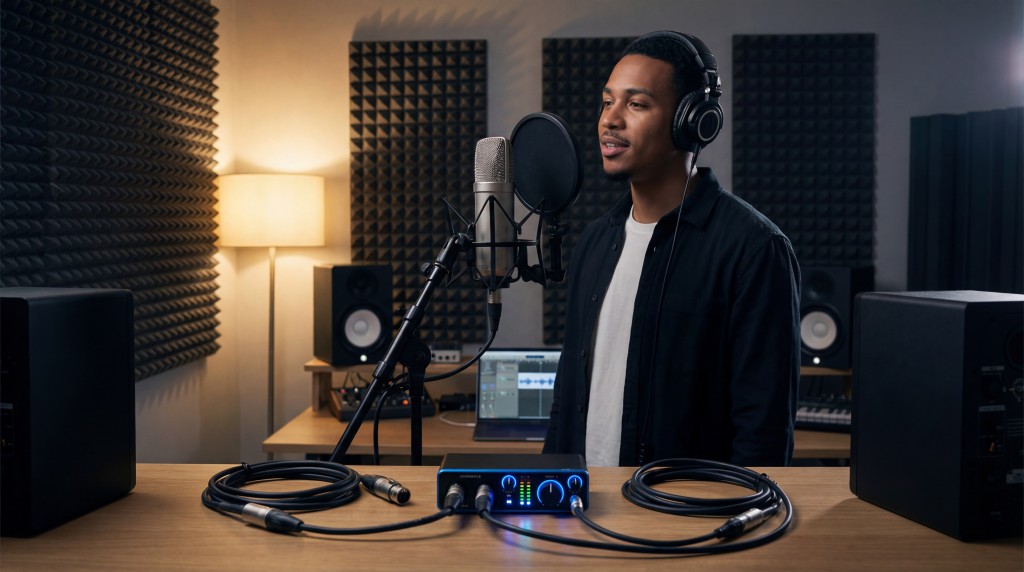
XLR microphones dominate professional studios for one main reason. They separate components.
When you use an XLR microphone, the microphone captures sound and the interface handles amplification and conversion. This separation gives you control. If you want a cleaner preamp, you upgrade the interface. If you want a different vocal tone, you change the microphone. You are not locked into a single sound path.
This matters for rappers because vocals are everything. Your voice is the product. Small improvements in clarity, warmth, and control stack up over time.
XLR microphones also tend to handle dynamics better. Rap vocals often involve sudden volume changes, aggressive delivery, and layered performances. A good XLR setup gives you more headroom and better transient handling.
Another advantage is monitoring quality. Dedicated interfaces usually offer zero-latency monitoring with better headphone amps. This makes it easier to perform confidently, stay on beat, and lock into your delivery.
Finally, XLR setups scale naturally. As your career grows, you can upgrade one piece at a time. New mic. Better interface. Acoustic treatment. External preamp. Your setup evolves instead of being replaced entirely.
The Myth of “You Need XLR to Be Taken Seriously”
One of the biggest myths in independent music is that you must use XLR gear to be a real artist.
This is not true.
Plenty of successful songs started as USB mic recordings. Plenty of viral verses were recorded in bedrooms on simple setups. Listeners care about performance, emotion, and songwriting far more than gear choices.
The real question is not what looks professional. The question is what helps you work better right now.
If a USB microphone allows you to record more consistently, write more music, and stay inspired, it is doing its job. If an XLR setup intimidates you or slows you down, it is not helping.
Professionalism is not about gear. It is about output and improvement. Understanding the difference between USB vs XLR microphones for rap vocals helps independent rappers avoid upgrading too early or choosing the wrong setup.
When USB Microphones Make Sense for Rappers
USB microphones are a strong choice if you are early in your journey and want to focus on writing and recording without friction.
They make sense if you are recording demos, reference tracks, or content for social media. They are great for quick ideas, late-night sessions, and artists who move around a lot.

They also work well if you are learning the basics of recording and mixing. You can develop your ear, practice vocal technique, and understand how compression and EQ affect your sound without investing heavily upfront.
For rappers who prioritize speed and accessibility, USB microphones remove excuses. You can sit down and create.
When XLR Microphones Become the Better Choice
XLR microphones become worth it when you start hearing the limitations of your current setup.
If you find yourself fighting harshness, noise, or lack of depth in your vocals, an XLR system can help. If you are releasing music more seriously and want consistency across songs, albums, or features, the upgrade matters.
XLR setups also shine when you start layering vocals heavily. Ad-libs, doubles, harmonies, and stacks benefit from cleaner signal paths and better gain control.
If you collaborate with other artists in person, an interface-based setup makes multi-mic recording possible. USB microphones generally do not handle that well.
Most importantly, XLR systems support long-term growth. They reward learning. As you improve mic technique, room treatment, and mixing skills, the results become noticeably better.
Sound Quality Is More Than the Mic
It is important to say this clearly. The microphone alone does not determine your sound.
Room acoustics, vocal technique, distance from the mic, and consistency matter just as much. A great XLR microphone in a bad room can sound worse than a decent USB mic used correctly.
Independent rappers should prioritize fundamentals before chasing upgrades. Learn how to control plosives. Learn how to angle the mic slightly off-axis. Learn how to treat reflections with basic materials.
Once those fundamentals are in place, better gear actually makes a difference.
A Realistic Upgrade Path
Many independent rappers follow a natural progression.
They start with a USB microphone to learn and create without friction. They build confidence, release music, and develop their voice.
Eventually, they move to an entry-level XLR microphone and a solid interface. This is where sound quality noticeably improves, not because the mic is magical, but because the system allows better control.
From there, upgrades become targeted. Better interface. Different microphone for a different tone. Room treatment. Monitoring improvements.
This path avoids wasted money and burnout.
Choosing What Is Right for You
The right choice depends on your current reality, not someone else’s studio tour.
Ask yourself how often you record. Ask yourself whether your current setup helps or hinders your creativity. Ask yourself if you are still learning basics or refining details.
USB microphones are tools for access and momentum. XLR microphones are tools for refinement and scalability.
Neither makes you a better rapper. Your work ethic does.
Final Thoughts
USB versus XLR is not a battle. It is a timeline.
Independent rappers should choose the tool that supports where they are, not where they think they are supposed to be. The goal is not to impress engineers or look professional on Instagram. The goal is to record vocals that feel honest, confident, and repeatable. There is no universal winner in the debate around USB vs XLR microphones for rap vocals, only the setup that best supports your creative consistency.
When your setup allows you to create more music with less resistance, you are moving in the right direction.
Gear should serve the art, not distract from it.
If you are recording consistently and improving, you are already doing it right. Check out the article on “Best Microphone for Rap Vocals” to get a more detailed review on specific microphone models.